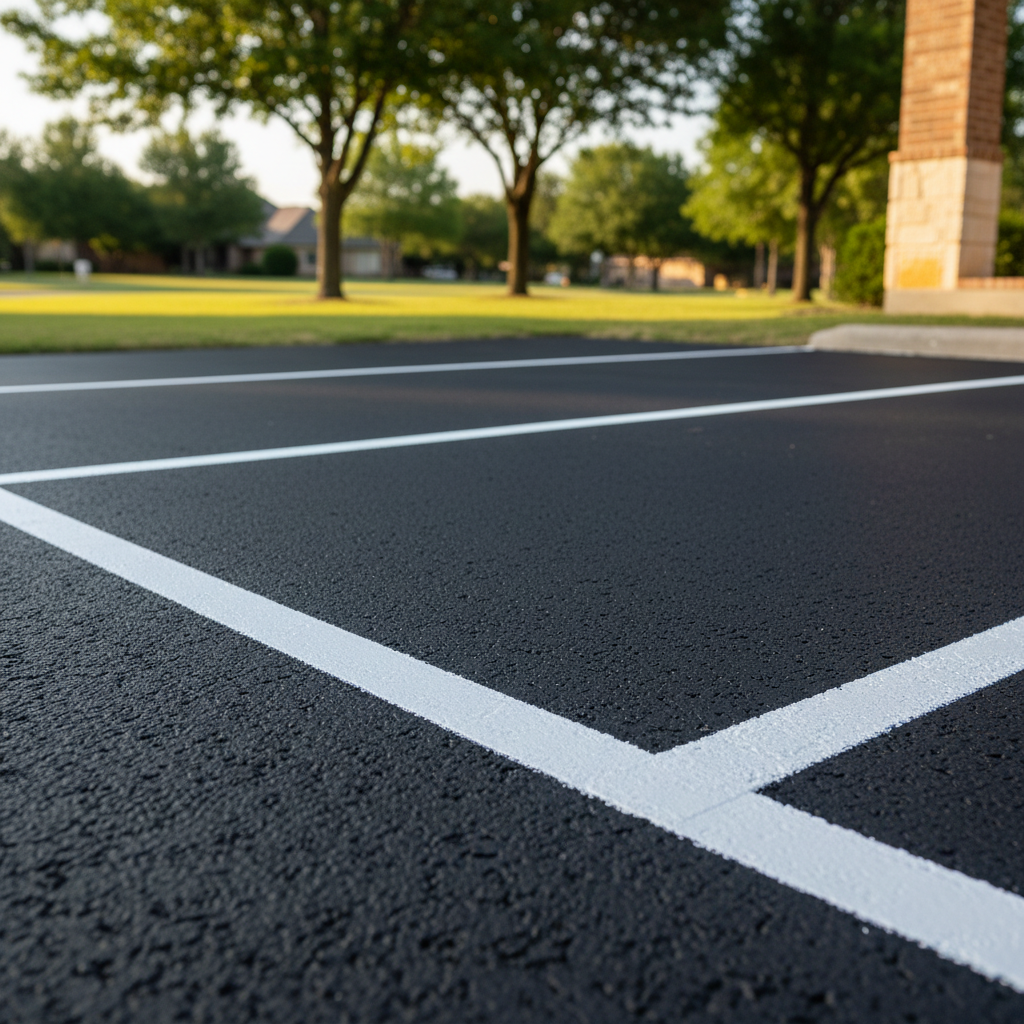
Alright, let's talk striping. You've got a parking lot, a basketball court, maybe even a long private drive that needs some clear lines. I get a lot of questions about this, and it's more than just slapping down some paint. Here in Hutto, whether you're off FM 1660 or closer to downtown, good striping makes a huge difference in safety and appearance. So, let's get into the nitty-gritty of what you need to know.
What's the difference between paint and thermoplastic for striping?
This is probably the most common question I hear. Think of it like this: paint is your standard, budget-friendly option. It's what you see on most parking lots. It does the job, it looks good, and it goes on pretty fast. But it wears down quicker, especially in high-traffic spots or areas that get a lot of sun and rain — which we definitely get here in Central Texas, don't we? You'll likely need to re-stripe painted lines every 1-3 years, depending on how much traffic you have and the weather.
Thermoplastic, on the other hand, is a whole different beast. It's a plastic material that gets heated until it's liquid, then applied to the asphalt. When it cools, it hardens into a super durable, reflective line. It costs more upfront, no doubt about it. But it lasts way longer – we're talking 5-8 years, sometimes even more. It's also more visible, especially at night, because it has reflective beads mixed in. For busy commercial lots or places where durability and visibility are super important, thermoplastic is usually the better investment in the long run. For a small residential basketball court, though, paint is probably fine.
How long does asphalt striping take to dry or cure?
This depends entirely on the material we use and the weather. If we're using standard traffic paint, it's usually dry to the touch within 20-30 minutes. You can typically drive or walk on it within an hour or two, but I always recommend giving it a full 24 hours to completely cure, especially if it's a critical area. You don't want tire marks or scuffs messing up your fresh lines, right?
With thermoplastic, the drying time is much faster. Because it cools and hardens, it's usually ready for traffic within minutes of application. That's a big advantage for businesses that can't afford to close their parking lot for long. We're talking about getting back to normal operations almost immediately.
What affects the cost of striping a parking lot?
A few things really drive the cost. First, the size of the area, obviously. More square footage means more material and more labor. Second, the type of material – paint versus thermoplastic, as we just discussed. Thermoplastic is pricier per linear foot.
Then there's the layout complexity. A simple grid of parking spaces is one thing, but if you've got intricate directional arrows, handicap symbols, fire lanes, pedestrian crossings, or custom logos, that takes more time and skill, which adds to the cost. Existing lines that need to be removed or blacked out before new ones go down will also increase the bill. And finally, site preparation. If the asphalt needs a good cleaning or repairs before we can stripe, that's another factor. We always give you a clear quote upfront so there are no surprises.
Do I need to re-stripe my parking lot if I just had it sealcoated?
Absolutely, yes. Think of sealcoating as putting a fresh coat of clear protection over your asphalt. It covers everything, including your old lines. So, after a fresh sealcoat, your parking lot will look brand new, but it'll be a blank slate. You'll definitely need to re-stripe all your parking spaces, fire lanes, handicap symbols, and directional arrows. We usually recommend doing the sealcoating first, letting it cure completely (usually 24-48 hours), and then coming back to do the striping. It gives you the best, cleanest result.
Can you stripe on concrete as well as asphalt?
Yep, we can stripe on concrete. It's a bit different, though. Concrete isn't as porous as asphalt, so the paint sticks differently. We use specialized paints and primers made for concrete to make sure it adheres well and lasts. The process is similar, but the materials are chosen specifically for the surface. So if you've got a concrete loading dock or a specific area that needs lines, we can definitely handle it.
How often should I re-stripe my parking lot in Hutto?
This really depends on the material you chose and how much traffic your lot sees. For standard paint, especially in a high-traffic area like a retail center near the Hutto Co-op, you're probably looking at re-striping every 1-3 years. If it's a lower-traffic residential complex or a private drive, you might get 3-4 years out of it before it starts looking faded and worn. Thermoplastic, as I mentioned, can last 5-8 years or even longer. We've seen some last a decade with proper maintenance.
Beyond just the material, consider how it looks and how safe it is. Faded lines look unprofessional and can cause confusion, possibly leading to accidents. If your handicap spaces aren't clearly marked, you could face fines. So, it's not just about how long it lasts; it's about keeping things safe, compliant, and looking professional. I always tell folks, if the lines are looking dull or hard to see, it's time to think about a refresh. Oasis Asphalt Inc. can come out and give you an honest assessment.
What kind of preparation is needed before striping?
Good prep is key to a long-lasting stripe. First, the surface needs to be clean and dry. We'll sweep away any loose dirt, gravel, or debris. If there are oil spots or other gunk, we'll clean those up because paint won't stick well to grease. For new asphalt, we usually let it cure for at least 30 days before striping to make sure any oils have leached out and the surface is stable. If we're re-striping over existing lines, we might need to black out the old, faded ones first to ensure the new ones pop and look crisp. It's all about creating the best possible canvas for those new, bright lines.